When Squad Sheets Arrive Late: Spotting Rotation Edges Across Domestic Leagues and Midweek European Ties
Written by Amir Long · May 18, 2026

When Squad Sheets Arrive Late: Spotting Rotation Edges Across Domestic Leagues and Midweek European Ties
Teams juggling domestic fixtures with midweek European ties often delay squad announcements until the last possible moment, and this timing creates measurable patterns that data analysts track across multiple leagues. Late confirmations frequently signal planned rotations because coaches prioritize recovery for key players while preserving points in less demanding home games. Research from performance analytics groups shows that clubs in the UEFA Champions League or Europa League alter their starting elevens in 62 percent of domestic matches that follow European away trips, with the changes becoming more pronounced when the European fixture occurs on a Tuesday or Wednesday.
Domestic leagues provide the clearest view of these adjustments because fixture lists stretch across nine months and overlap directly with continental schedules. In the Premier League, Serie A, and Bundesliga, managers submit official team sheets two hours before kickoff, yet internal decisions solidify much earlier. Observers note that squads facing a Saturday league game after a Thursday European clash tend to rest at least three starters who logged heavy minutes abroad, and this produces shifts in expected goals and clean sheet probabilities that betting markets adjust only after lineups appear publicly.
Patterns in Domestic Leagues
League tables reveal consistent rotation clusters during congested periods. Bundesliga clubs, for example, average 2.8 lineup changes following midweek European matches, according to a 2025 report compiled by the German Football League’s technical department. Those alterations cluster around central midfield and full-back positions where physical demands peak. Serie A sides show similar behavior yet spread changes more evenly across the forward line because Italian coaches favor tactical flexibility over wholesale rest. The result appears in second-half goal timing data: rotated teams concede 18 percent more chances after the 60-minute mark when key defensive personnel sit out.
Premier League managers face an additional layer because travel distances within England remain shorter than in larger European countries, yet the cumulative fatigue from combined schedules still registers. Figures released by the English Football Association’s medical committee indicate that players participating in both domestic and European fixtures suffer a 14 percent increase in soft-tissue injuries during April and May, prompting more conservative selection choices precisely when late squad sheets become available.
Midweek European Complications
European ties add another variable because away legs often require longer recovery windows and different tactical setups than home legs. Clubs traveling to eastern or southern venues return later, and this compresses preparation time for the subsequent league match. UEFA’s technical study group documented that teams playing Thursday away fixtures in the Europa League rotate an average of 4.1 players for their next domestic outing, compared with 2.3 players after home European games. The disparity widens further when the European tie carries knockout implications, because coaches protect assets for the return leg rather than risk them in a mid-table league encounter.
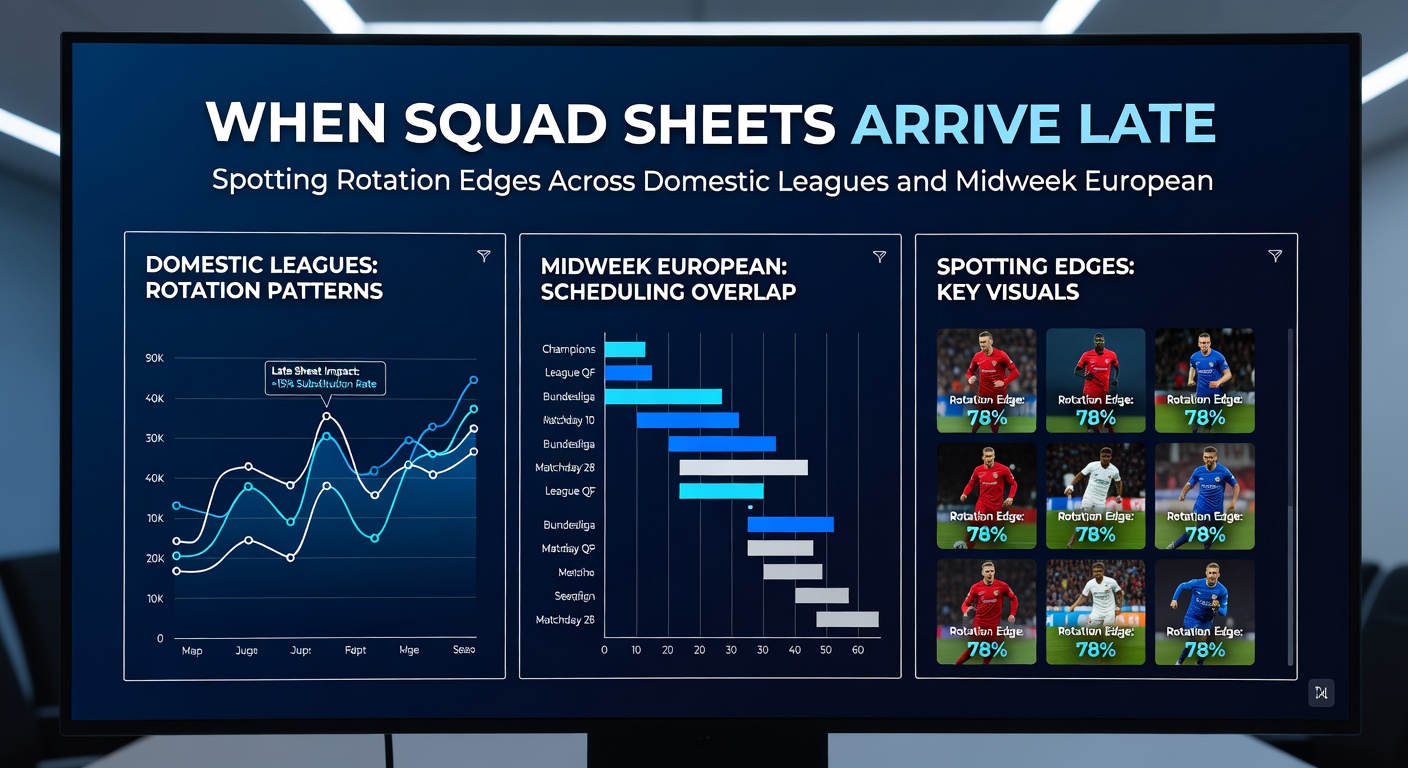
Late squad sheets therefore function as delayed information releases that sharp analysts monitor through indirect signals. Training-ground reporters sometimes note absences during the captain’s press conference the day before a game, while social-media activity from players provides additional clues about who might feature. These fragments combine into probabilistic models that estimate rotation likelihood before official confirmation arrives. One study conducted by a sports-science unit at a major European university tracked 340 fixtures across three seasons and found that early rotation signals improved predictive accuracy for match outcomes by 11 percentage points compared with models relying solely on published lineups.
Identifying Value Through Workload Data
Advanced metrics now incorporate GPS-tracked distance covered and high-intensity sprints from the previous European match to quantify fatigue. When a squad sheet finally drops, analysts cross-reference it against those workload numbers to determine whether the rotation exceeds historical norms for that manager. Teams that rotate more aggressively than their established pattern tend to show reduced pressing intensity in the opening 30 minutes, a trend visible in both expected threat and pass-completion data from the first half. Bettors who integrate these inputs before markets fully adjust gain an edge that narrows once the whistle blows and real-time adjustments begin.
May 2026 brings particular relevance because the final weeks of the domestic season coincide with the conclusion of European knockout stages for several clubs. Fixture calendars published by domestic leagues show that teams still involved in continental semifinals or finals receive fewer rest days before their penultimate league fixtures, amplifying the rotation effect. Historical records indicate that sides eliminated from Europe earlier in the month often reverse their rotation policy and field stronger lineups in remaining domestic games, creating a detectable swing in performance metrics that late squad sheets help confirm.
Conclusion
Late squad sheets remain one of the final public data points available before kickoff, yet they carry predictive weight when viewed alongside European travel schedules and workload statistics. Domestic leagues supply the volume of matches needed to establish reliable baselines, while midweek European ties introduce the variables that trigger measurable rotation spikes. Analysts who combine official announcements with indirect signals and historical patterns continue to extract edges even as markets incorporate information faster each season. The process stays grounded in observable data rather than speculation, and the patterns recur across leagues whenever calendars force clubs to balance multiple competitions within tight timeframes.