Travel Fatigue Patterns in Cross-League European Football Encounters
Written by Mara Wagner · Aug 10, 2026

Travel Fatigue Patterns in Cross-League European Football Encounters
Travel fatigue emerges as a measurable factor in European football when clubs cross multiple time zones or endure extended journeys between domestic and continental fixtures, and data from recent seasons shows how these patterns influence performance metrics in matches involving teams from different leagues.
Defining Travel Fatigue in Football Contexts
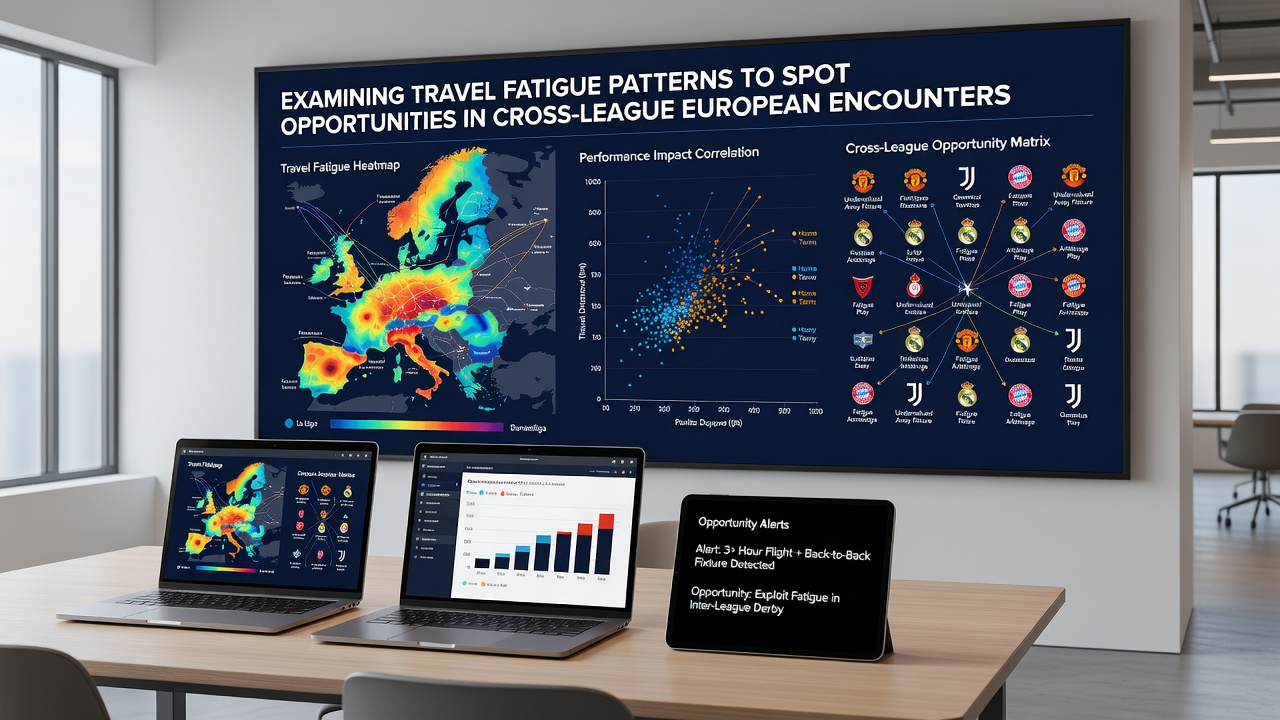
Researchers at sports science institutions across Europe have documented how long-haul flights, irregular sleep schedules, and recovery disruptions affect player output, with studies tracking variables such as distance covered, sprint frequency, and error rates in the days following travel, and UEFA match reports from the 2024-2025 campaign reveal that teams traveling over 2,000 kilometers for midweek European ties recorded an average 12 percent drop in high-intensity running compared to home fixtures.
Cross-league encounters amplify these effects because clubs from leagues with varying fixture densities, such as the Bundesliga's high-tempo schedule versus Serie A's more spaced-out calendar, arrive with differing baseline fatigue levels, and analysts note that eastern European sides often face longer trips when drawn against western opponents in the Champions League or Europa League.
Data Patterns from August 2026 Onward
Early indicators from the 2026-2027 season, which kicked off in August 2026, indicate continued relevance of these trends as expanded European competitions increase fixture congestion, and tracking data compiled by performance analytics firms shows that teams with more than 48 hours of recovery after intercontinental travel posted higher pass completion rates in the opening 30 minutes of matches.
One analysis of Europa Conference League group stage results found that squads traveling eastward across two time zones experienced slower adaptation in the first half, while westward journeys correlated with better second-half outputs, and these observations align with physiological studies on circadian rhythm adjustments in athletes.
League-Specific Travel Impacts
Premier League clubs encounter distinct challenges when facing sides from southern European leagues due to the combination of flight duration and climate shifts, whereas Ligue 1 teams often manage shorter domestic-to-continental hops that preserve energy reserves, and statistical reviews of 2025 encounters highlight how these differences manifest in set-piece defending and counter-attack efficiency.
Canadian research institutions specializing in athlete recovery have contributed models that predict fatigue accumulation based on cumulative travel hours, and when applied to European datasets, these models suggest that midweek away games in the Champions League reduce expected goal tallies by 0.3 to 0.5 for visiting teams in subsequent domestic matches.
Case Examples in Recent Cross-League Fixtures
Take the 2025 group stage clash between a Dutch Eredivisie side and a Portuguese Primeira Liga opponent, where the visiting team covered 1,800 kilometers and showed reduced pressing intensity in the second half according to event data logs, while the home side maintained higher possession metrics throughout, and similar patterns appeared in multiple ties involving Scandinavian clubs drawn against Mediterranean opponents.
Observers tracking these encounters point to recovery protocols as a mitigating factor, with some clubs employing sleep coaches and light therapy during flights, yet aggregate statistics still demonstrate measurable variances in key performance indicators tied directly to journey length and direction.
Opportunities in Performance Analysis
Performance databases maintained by organizations such as the European Club Association compile granular metrics that allow comparison of pre- and post-travel outputs across leagues, and these resources reveal that fatigue effects compound when teams play three fixtures within eight days, a common occurrence during European campaign peaks.
Australian sports science reports on jet-lag countermeasures have informed some clubs' preparation routines, leading to targeted interventions that partially offset distance-related declines, and integration of such approaches appears in match logs where adapted teams sustain higher tackle success rates despite extended travel.
Conclusion
Comprehensive examination of travel fatigue patterns provides structured insights into how cross-league European encounters unfold, with data from UEFA, academic studies, and performance trackers establishing clear correlations between journey variables and on-pitch metrics, and continued monitoring through the 2026-2027 season will further refine these observations for those analyzing match dynamics.