Liquidity Dynamics in Midweek European Matches: Refining Stake Calibration Strategies
Written by Mara Wagner · Jun 19, 2026
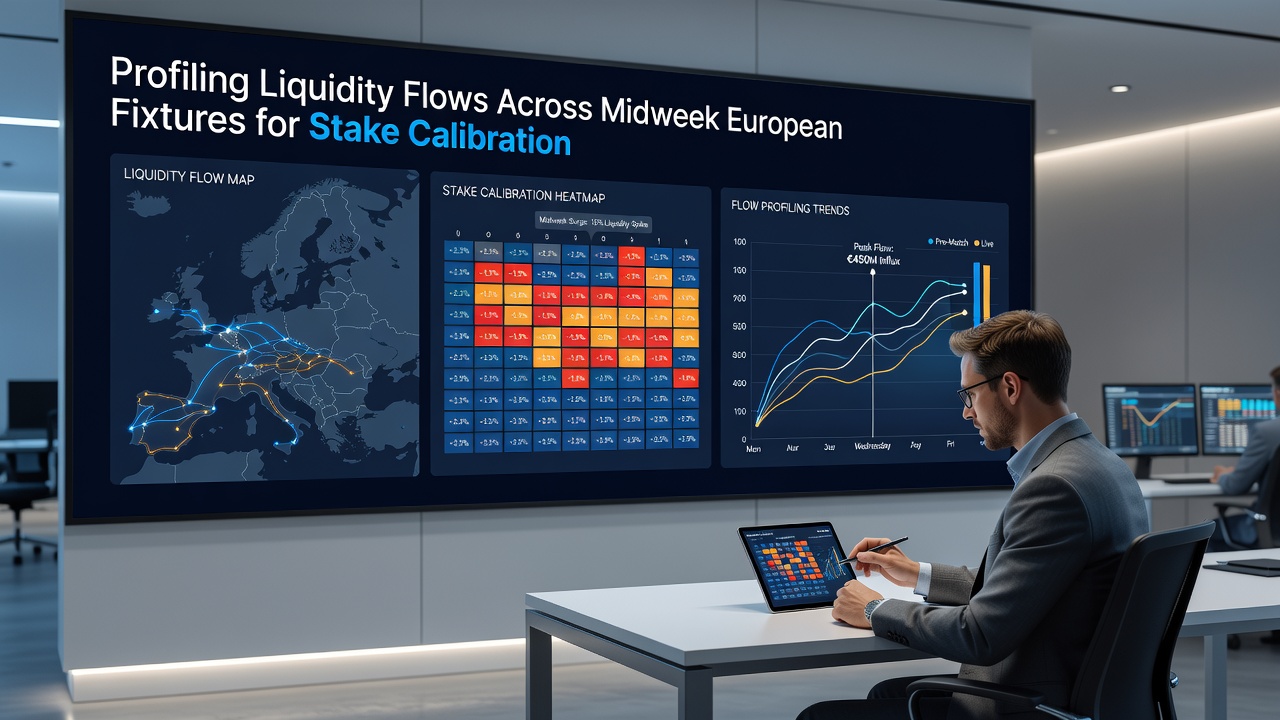
Liquidity Dynamics in Midweek European Matches: Refining Stake Calibration Strategies
European football schedules place multiple competitions into the same midweek slots, and these periods produce distinct liquidity signatures that differ from weekend fixtures. Market participants track order flow, depth of available prices, and timing of volume surges to build profiles that guide stake placement across Champions League, Europa League, and Conference League games. Data compiled through June 2026 shows that liquidity often concentrates in the final 90 minutes before kickoff for these matches, while earlier windows display thinner books and wider spreads.
Market Characteristics of Midweek Fixtures
Midweek European games attract uneven participation from recreational and professional layers, which creates measurable differences in available liquidity compared with domestic league rounds. Champions League encounters typically draw deeper books on the match winner line, yet goal totals and player props frequently operate with reduced depth once the primary markets fill. Observers note that simultaneous scheduling of multiple ties across time zones further fragments volume, leaving certain price points vulnerable to short-term imbalances when syndicates enter positions.
Stake calibration begins with mapping these depth variations against historical movement data. Analysts record the average size of best available back and lay offers at set intervals, then compare those figures against realized price shifts after each goal or card event. Patterns emerge where lower liquidity correlates with accelerated movements once early goals occur, requiring position sizes to scale downward to limit slippage. Higher liquidity environments permit larger entries without immediate displacement of the quoted price.
Profiling Techniques and Data Inputs
Profiling liquidity flows relies on timestamped records of matched volumes together with the distribution of unmatched orders. Several firms aggregate exchange feed data alongside bookmaker depth snapshots to construct heat maps that highlight periods of concentrated activity. One approach isolates the ratio of volume traded in the two hours before kickoff versus the same window on weekend fixtures, producing coefficients that feed directly into stake multipliers. Another method tracks the frequency of price refresh events, treating rapid updates as proxies for active professional interest that stabilizes the market.
Researchers have examined how liquidity behaves around specific in-game triggers such as red cards or penalty awards during these midweek slots. The resulting profiles indicate that certain scorelines trigger rapid liquidity replenishment on one side of the book while the opposite side remains thin, creating asymmetric risk for larger positions. Calibration models therefore incorporate conditional liquidity forecasts that adjust recommended stake sizes based on the current score and time remaining.
Application to Stake Sizing Models
Stake calibration integrates liquidity profiles through scaling rules that reference both pre-match depth and expected in-play replenishment rates. A position sized at 2 percent of available liquidity on a given line might reduce to 0.8 percent when depth falls below seasonal averages for that competition. Models also layer in correlation factors across simultaneous midweek fixtures, recognizing that capital rotation between overlapping games can drain liquidity from secondary markets faster than isolated encounters. Those who've studied this process report that dynamic recalibration during the match, guided by real-time depth readings, reduces variance in realized entry prices compared with static sizing.
External benchmarks from the Canadian Gaming Association illustrate similar liquidity sensitivity across North American sportsbooks, where midweek schedule compression produces parallel depth fluctuations. European operators apply comparable monitoring frameworks even though the underlying competitions differ.
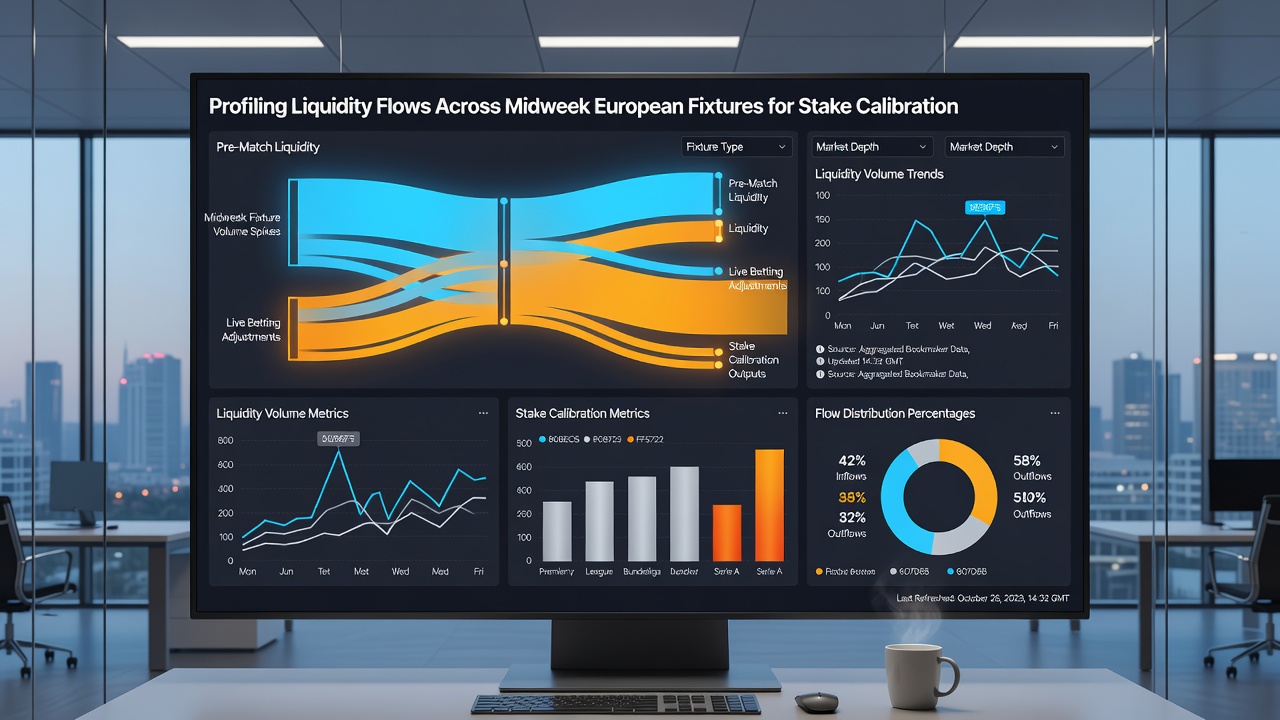
Regional Variations and Timing Factors
Fixtures scheduled in the late afternoon CET window often exhibit different liquidity trajectories than evening kickoffs because overlapping Asian market hours influence participation levels. Data sets compiled across the 2025-2026 campaign reveal that certain Eastern European venues attract steadier pre-match volume from regional operators, whereas matches in Western Europe experience sharper late surges once major syndicates finalize positions. Calibration protocols therefore embed venue-specific and time-zone adjustments rather than applying uniform multipliers across all midweek games.
Industry reports from the Australian Gambling Research Centre document analogous timing effects in rugby league markets, confirming that schedule density influences depth patterns across multiple sports. European football analysts apply parallel logic when constructing fixture-by-fixture liquidity matrices.
Conclusion
Profiling liquidity flows across midweek European fixtures supplies a structured foundation for stake calibration that accounts for measurable differences in market depth and replenishment speed. Organizations that maintain timestamped depth records and apply conditional scaling rules report more consistent entry prices, particularly when multiple competitions overlap. Continued aggregation of exchange and bookmaker data through the 2026 season supports ongoing refinement of these models as participation patterns evolve.