Disciplinary Patterns Offering Clues in Midweek European Ties
Written by Amir Long · Aug 3, 2026

Disciplinary Patterns Offering Clues in Midweek European Ties
Teams competing in UEFA Champions League and Europa League fixtures during midweek rounds often accumulate cards at different rates than they do in domestic leagues, and analysts track these variations to identify potential edges in betting markets focused on cards, bookings, and related outcomes. Data from recent seasons shows that travel demands, fixture congestion, and referee assignments create measurable shifts in foul counts and yellow card distributions, particularly when matches occur on Tuesdays and Wednesdays. Observers note that squads with strong midweek records in prior campaigns tend to manage disciplinary exposure more effectively, while those adjusting to new tactical setups exhibit higher caution rates in the opening weeks of the group phase.
Referee Assignments and Card Averages Across Competitions
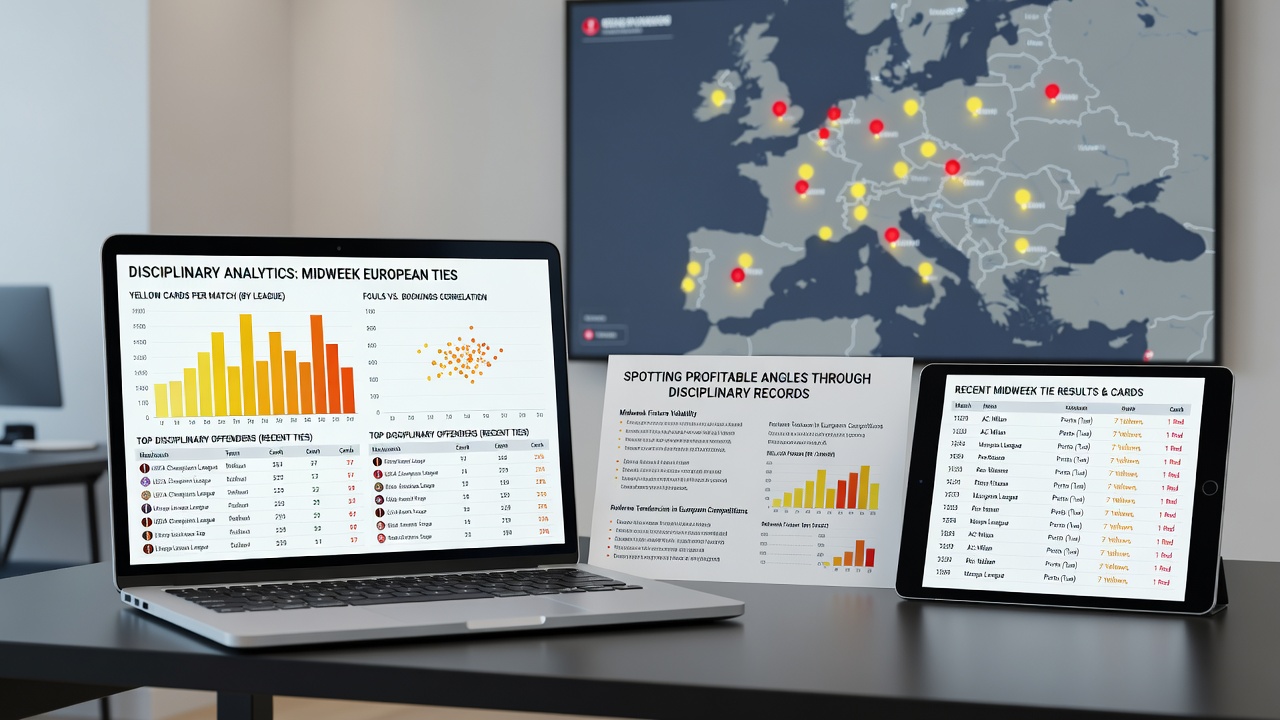
UEFA allocates officials with specific card-per-game profiles to midweek ties, and historical figures reveal that certain referees issue 4.2 to 5.8 yellow cards on average in continental matches compared with their domestic averages. Those who study these patterns examine the last five to ten games each referee handled in similar time slots, noting whether they lean toward early cautions or allow more physical play before intervening. When a referee with an elevated card rate receives a fixture involving two teams known for aggressive pressing, the combined data often points toward over lines in the cards market holding value through the first half alone. Figures from the 2025/26 campaign indicate that midweek assignments produced a 12 percent increase in total bookings versus weekend equivalents, a trend that continued into the opening weeks of August 2026 when new qualifying rounds began.
Team-Specific Trends in European Away Fixtures
Clubs traveling to midweek venues frequently post higher foul totals in the opening 30 minutes, largely because they attempt to disrupt home possession before settling into defensive blocks. Researchers tracking these tendencies have compiled multi-season datasets showing that certain sides exceed 14 fouls per European away game, while others maintain tighter discipline even on the road. One study of 180 midweek ties found that teams with above-average travel distances recorded 1.8 additional yellow cards per match, a margin that influences both player suspension markets and team total card bets. Those who review pre-match reports often cross-reference these numbers with the opponent’s recent disciplinary output to isolate matches where both sides project elevated card counts.
Fixture Congestion and Rotation Effects
Clubs balancing domestic and European schedules rotate personnel more aggressively before midweek rounds, and the resulting lineups sometimes feature players with less familiarity in high-pressure environments. Rotation correlates with a measurable rise in late first-half bookings because incoming players commit fouls while adjusting to the tempo set by opponents. Data compiled across multiple campaigns shows that squads playing their third match in eight days average 2.3 more cards than fresher opponents, a gap that widens further when the congested side travels. Analysts combine this information with referee tendencies to construct models that flag specific player prop bets on cards or player suspension risks.
Integrating Multiple Data Layers
Effective use of disciplinary records requires combining referee history, team travel logs, and recent form into a single framework rather than relying on isolated statistics. Several betting syndicates now employ automated alerts that flag fixtures where projected card totals exceed market lines by a defined threshold. According to reports from the European Gaming and Betting Association, operators have noted increased interest in these niche markets as more detailed performance data becomes publicly accessible. Cross-checking with injury reports and tactical previews further refines the selection process, allowing observers to isolate matches where multiple variables align in one direction.
Conclusion
Disciplinary records provide a structured lens for evaluating midweek European ties when analysts incorporate referee profiles, travel impact, and fixture density into their assessments. The patterns observed in recent seasons demonstrate consistent relationships between these factors and card volumes, offering measurable inputs for markets centered on bookings and related outcomes. Continued collection of granular data throughout the 2026/27 campaign will likely strengthen the reliability of such approaches as more fixtures are completed under the current UEFA format.