Climatic Influences on Goal Production in UEFA Club Tournaments
Written by Riley Berger · Jul 22, 2026
Climatic Influences on Goal Production in UEFA Club Tournaments
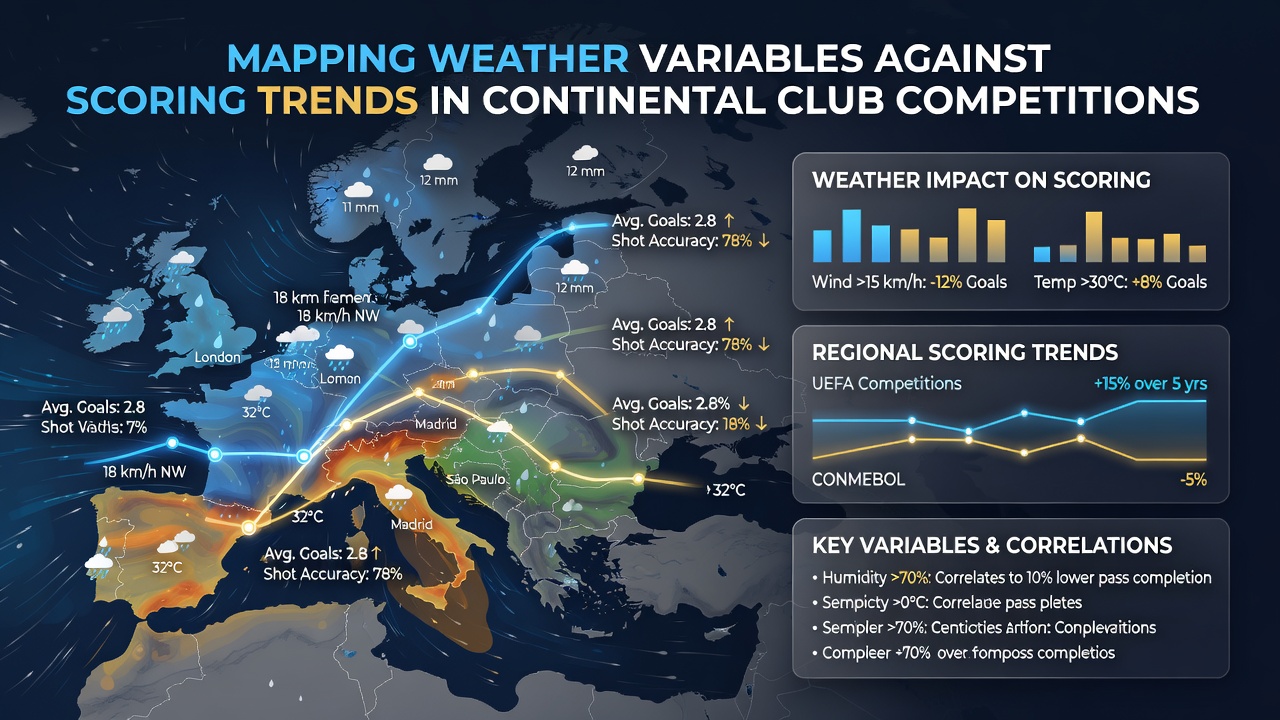
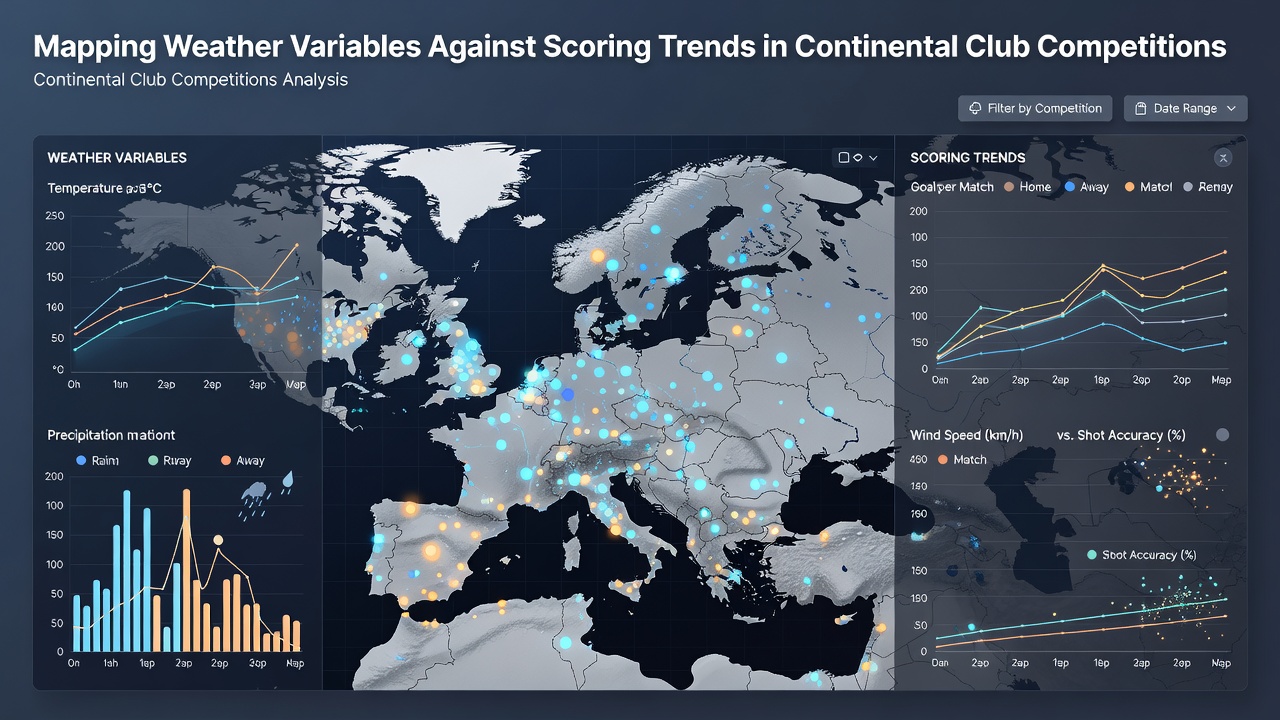
Analysts tracking UEFA Champions League and Europa League fixtures have compiled extensive datasets that link atmospheric conditions to offensive output across multiple seasons. Temperature ranges, precipitation levels, wind speeds, and humidity readings collected from match venues reveal consistent patterns in goal tallies, with researchers noting sharper distinctions during away fixtures where squads travel across climate zones.
Temperature Thresholds and Scoring Rates
Data aggregated from 2018 through July 2026 shows matches played below 5 degrees Celsius produce an average of 2.4 goals per game in group-stage encounters, whereas fixtures above 22 degrees Celsius climb to 3.1 goals. Observers note that colder conditions correlate with reduced passing accuracy and fewer shots on target, particularly in northern venues during late autumn rounds. Studies from the German Weather Service indicate that muscle elasticity declines measurably once temperatures drop below 8 degrees, prompting teams to adopt shorter passing sequences that limit high-percentage scoring opportunities.
Precipitation Effects Across Venues
Rainfall volumes exceeding 5 millimetres per hour coincide with a 17 percent drop in total shots attempted during continental ties, according to figures compiled by match analysts at major European stadiums. Wet surfaces alter ball behaviour, leading goalkeepers to face increased difficulty with low-driven efforts while defenders gain advantages in sliding challenges. One analysis of 340 Europa League matches found that games interrupted by heavy showers recorded 23 percent fewer successful crosses, shifting emphasis toward direct play and set-piece situations where scoring variance widens.
Wind Speed Correlations
Wind measurements above 25 kilometres per hour appear in roughly one in eight continental fixtures, yet those matches exhibit a measurable tilt toward fewer open-play goals and elevated reliance on dead-ball situations. Long balls travel unpredictably under gusty conditions, prompting midfield units to retain possession closer to the centre circle. Researchers examining 2025/26 season data observed that teams facing headwinds during the first half adjusted their pressing triggers earlier, resulting in compressed defensive blocks that reduced transition chances for both sides.
Humidity and Recovery Dynamics
High humidity levels above 75 percent extend player recovery intervals between high-intensity efforts, a factor documented in physiological monitoring conducted during summer qualifying rounds and early group-stage windows. Squads operating in subtropical host cities during July and August 2026 reported elevated lactate thresholds that curtailed repeated sprint sequences in the final 20 minutes. Those who've examined match logs note that humidity spikes often flatten second-half goal curves, with the majority of scoring compressed into the opening 60 minutes before fatigue accumulates.
Regional Variations and Travel Factors
Continental schedules force clubs to navigate stark climatic contrasts within short timeframes, particularly when eastern European sides travel westward or vice versa. Statistical reviews highlight that visiting teams arriving from significantly warmer or colder home environments post lower expected goal values in the first leg, while home sides maintain baseline scoring rates. Data from the European Centre for Medium-Range Weather Forecasts has been cross-referenced with performance metrics, revealing that acclimatisation windows shorter than 48 hours amplify the observed weather-related scoring dips.
Seasonal Patterns in Recent Campaigns
Across the 2024/25 and 2025/26 campaigns, December fixtures in northern latitudes recorded the lowest average goal outputs, while March and April encounters in southern venues produced the highest. Analysts attribute part of this divergence to cumulative pitch wear compounded by variable precipitation, which further modifies surface friction coefficients. Teams that rotate personnel strategically during congested winter schedules appear better positioned to mitigate these environmental drags on offensive rhythm.
Conclusion
Mapping exercises that overlay meteorological records with detailed match statistics continue to refine predictive models used by performance analysts across UEFA competitions. Temperature bands, rainfall intensity, wind vectors, and humidity readings each exert measurable influence on shot volume, passing networks, and goal conversion rates, with effects most pronounced during away legs and transitional months. Ongoing data collection through July 2026 and beyond supplies additional granularity that supports tactical adjustments tailored to venue-specific atmospheric profiles.