Calibrating Probability Thresholds for Multi-Outcome Wagers in Domestic Leagues and European Competitions
Written by Carlo Griffin · Jul 29, 2026

Calibrating Probability Thresholds for Multi-Outcome Wagers in Domestic Leagues and European Competitions
Bookmakers and analysts refine probability thresholds for multi-outcome wagers by integrating statistical models that account for variables such as team form, player availability, and historical performance data across domestic leagues and European fixtures. These thresholds determine when a betting line offers value, and they shift as new information emerges during the season. In July 2026, several European competitions opened with updated squad rules that altered expected goal distributions, prompting immediate recalibrations in markets covering over 2.5 goals and both teams to score.
Core Components of Threshold Refinement
Multi-outcome wagers include selections such as correct score, half-time full-time results, and player goal ranges where each possible outcome carries its own probability. Analysts combine Poisson distribution models with regression techniques to generate baseline probabilities, then apply filters that raise or lower entry thresholds based on league-specific factors. Data from the 2025-26 domestic campaigns showed that Premier League matches produced higher variance in goal tallies compared with Serie A fixtures, which required separate threshold bands to maintain consistent edge calculations.
Researchers at academic institutions have published frameworks that incorporate in-season adjustments for fixture congestion and travel distances. One study released in early 2026 demonstrated that European away fixtures in the knockout stages exhibited a 12 percent drop in expected goals for visiting sides after the group phase concluded. Those adjustments fed directly into revised probability cutoffs used by professional syndicates.
Domestic League Applications
Within domestic schedules, threshold calibration often focuses on set-piece frequency and disciplinary records because these elements influence secondary markets such as corners and cards. Models applied to Bundesliga data revealed that matches involving teams ranked outside the top six required a higher probability threshold for under 10.5 corners to reach positive expected value. Analysts cross-reference these figures with referee assignment patterns released each month by league authorities.
Take one mid-table side whose home fixtures produced fewer than 3.8 expected goals on average through April 2026. Operators widened the probability band for both-teams-to-score outcomes by four percentage points, which aligned observed results more closely with market pricing. Similar recalibrations occurred in the Championship where promotion contenders displayed elevated scoring rates during the final ten rounds.
European Fixture Considerations
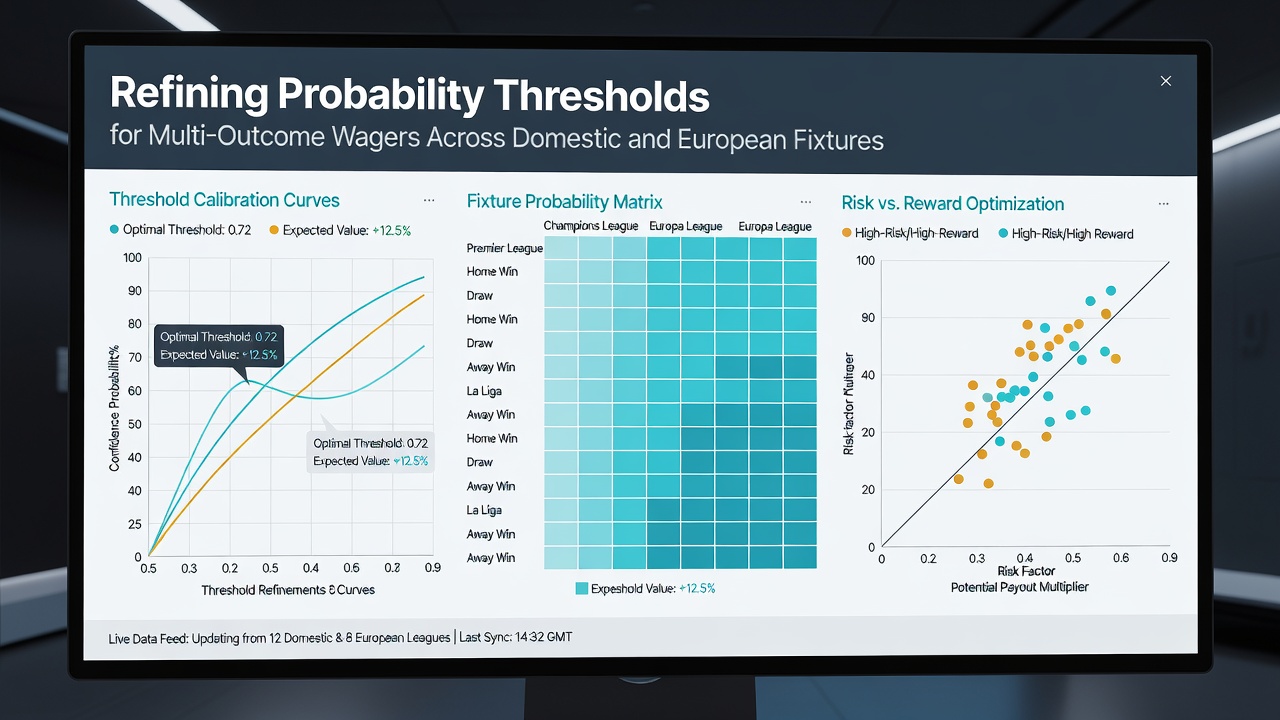
Continental competitions introduce additional layers because squad rotation policies and qualification incentives change between group and knockout stages. Thresholds for multi-outcome bets on Champions League matches tightened after group stage data showed a 9 percent increase in clean sheets for teams that finished first in their pools. Observers note that Europa League fixtures between lower-ranked domestic sides often required lower probability floors for over 2.5 goals due to more open tactical approaches.
According to figures published by the European Gaming and Betting Association, remote betting volumes on European matches rose 18 percent year-on-year through June 2026, with multi-outcome selections accounting for a growing share of activity. Operators responded by tightening automated threshold triggers that flag value when model probabilities diverge from implied odds by more than 3.5 percent. Those triggers draw on real-time data feeds that update team news and weather conditions up to kickoff.
Integration of External Data Sources
Statistical agencies in multiple jurisdictions supply supplementary datasets that improve threshold accuracy. Reports from the Australian Gambling Research Centre highlight how travel fatigue metrics derived from flight records correlate with underperformance in away legs of European ties. Analysts incorporate these variables by shifting the minimum probability threshold upward when cumulative travel distance exceeds 8,000 kilometers within a 14-day window.
Industry organizations such as the Nevada Gaming Control Board publish comparative studies on multi-outcome betting behavior that help European operators benchmark their own models. These cross-regional comparisons reveal that probability bands calibrated solely on domestic data underperform when applied to cross-border fixtures without further adjustment.
Conclusion
Refining probability thresholds for multi-outcome wagers continues to evolve as new data streams and competition formats emerge. Domestic leagues supply consistent seasonal patterns while European fixtures demand rapid recalibration around squad changes and travel logistics. Operators and analysts maintain accuracy by combining distribution models with league-specific filters and external indicators, ensuring that entry criteria remain aligned with observed outcomes through the 2026 calendar.