Atmospheric Variables and Their Influence on Scoring Rates in Elite League Fixtures
Written by Amir Long · Jul 27, 2026
Atmospheric Variables and Their Influence on Scoring Rates in Elite League Fixtures
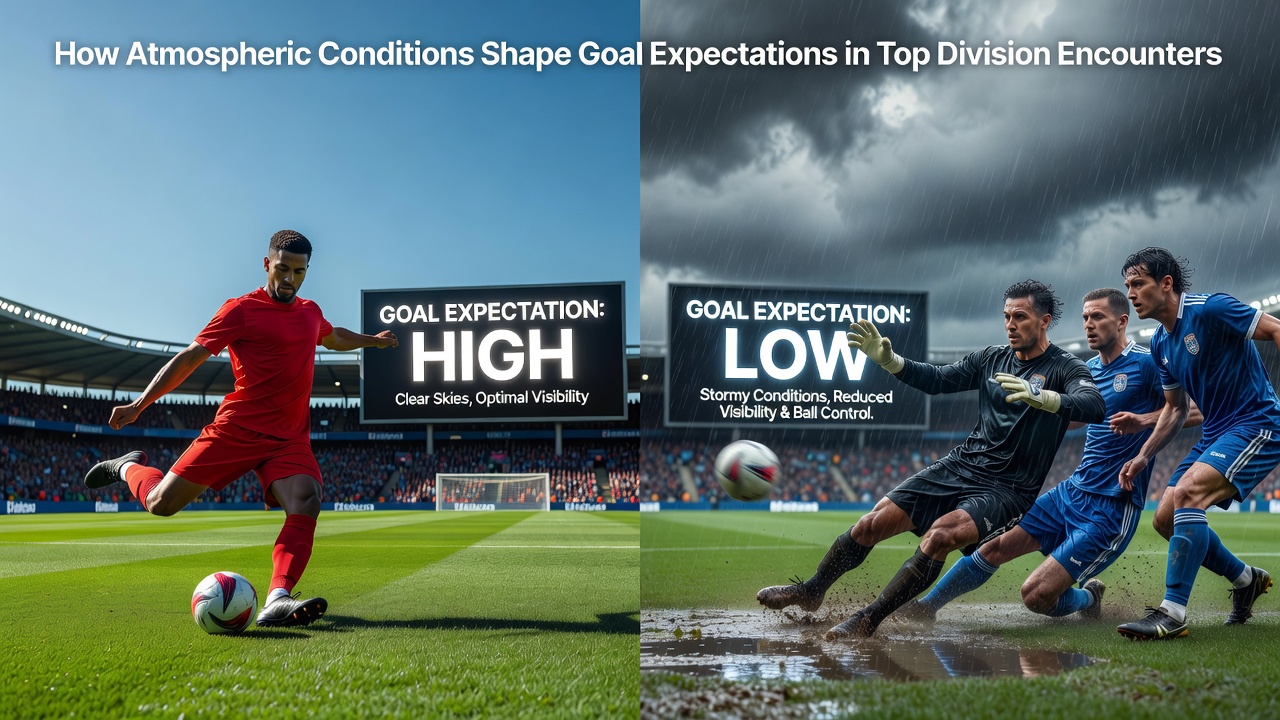
Atmospheric conditions alter ball trajectory and player exertion levels in ways that shift expected goal outputs during top division encounters, and data collected across multiple European and South American leagues illustrate consistent patterns tied to temperature, humidity, air pressure, wind speed, and precipitation.
Air Density and Ball Flight Dynamics
Lower air density at higher temperatures or altitudes allows the ball to travel farther with less drag, while higher density in cooler, humid conditions increases resistance and reduces shot range. Researchers at the National Oceanic and Atmospheric Administration documented how a 10-degree Celsius rise in temperature can extend a typical long-range strike by up to two metres, a measurable change that influences shot selection and defensive positioning in leagues such as the Bundesliga and Serie A.
Matches played above 1,500 metres, including fixtures in the Chilean Primera División and certain Colombian encounters, record elevated goal tallies when compared with sea-level venues because thinner air reduces drag on crosses and through balls. Observers note that goalkeepers adjust their starting positions outward in these environments, which opens space for near-post finishes and contributes to the higher scoring averages recorded in those regions through July 2026.
Temperature Effects Across Seasons
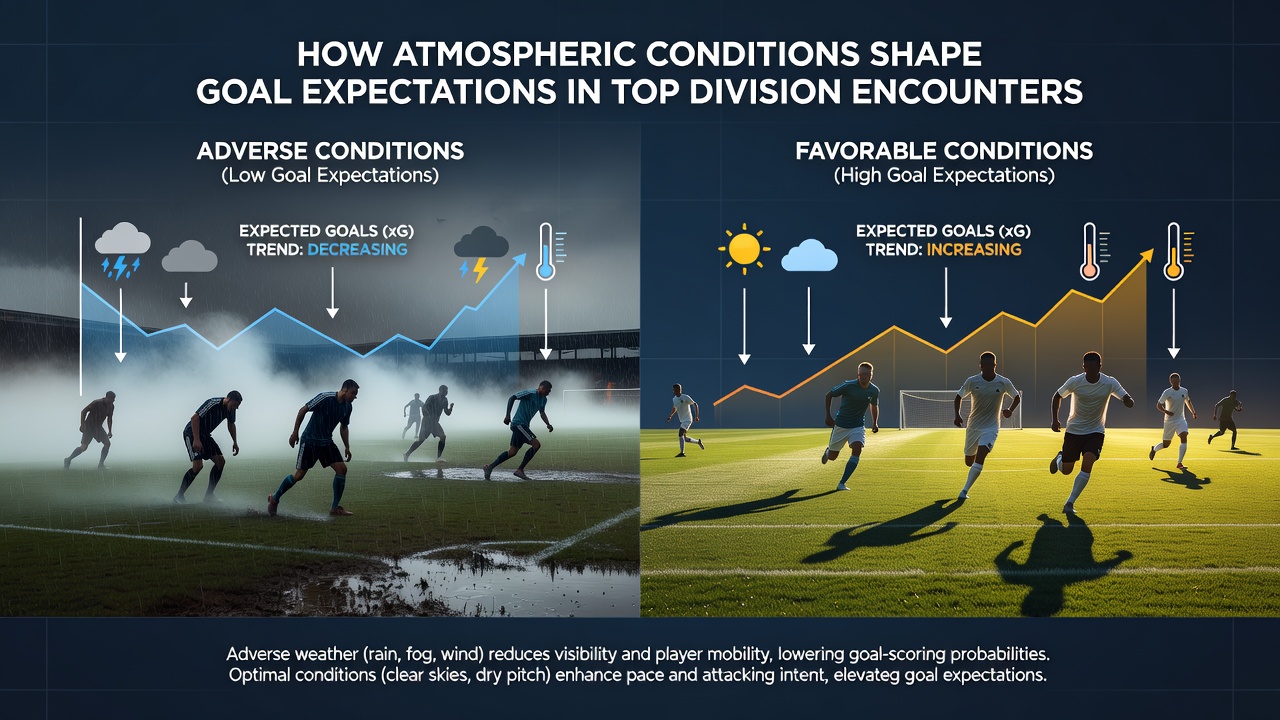
Winter fixtures in northern Europe often feature colder, denser air that shortens passes and slows long-range efforts, prompting teams to rely more on short combinations inside the penalty area. Data from the 2025/26 campaign showed a 0.3 goal per game drop in average scoring during sub-zero matches in the Premier League and Eredivisie relative to summer fixtures, while warmer conditions in southern leagues correlated with increased long-range attempts and slightly higher totals.
Humidity compounds these temperature influences because moist air holds less oxygen, raising fatigue rates for players covering large distances. Studies conducted by sports science teams in Australia and Canada indicate that relative humidity above 70 percent extends recovery times between high-intensity efforts, reducing the frequency of late-game surges that typically produce additional goals in drier climates.
Wind, Precipitation, and Set-Piece Outcomes
Strong crosswinds alter the flight path of set pieces and long passes, forcing teams to favour ground-based attacks that generate fewer clear chances but also fewer turnovers. In the Portuguese Primeira Liga and Greek Super League, matches with sustained winds above 25 km/h have produced measurably lower corner conversion rates, shifting expectations toward fewer total goals from dead-ball situations.
Rainfall increases surface friction and reduces ball bounce, which compresses attacking options into tighter spaces near the goal. Figures compiled by meteorological services in Scandinavia reveal that games played in steady rain record approximately 12 percent fewer shots from outside the box, while the proportion of goals scored from inside the six-yard area rises accordingly. These adjustments appear consistently across multiple top divisions and remain relevant in the opening weeks of the 2026/27 season.
League-Specific Patterns and Data Trends
League tables compiled through July 2026 highlight how clubs based in variable climates adapt their tactical profiles. Teams in the Swiss Super League, where altitude and temperature fluctuate sharply between venues, maintain higher average possession in low-density conditions to exploit extended passing ranges. In contrast, clubs competing in the more stable maritime climate of the English Championship show smaller deviations in goal expectations tied to weather, yet still register measurable drops during heavy rain periods.
International governing bodies and academic consortia continue to track these variables because they affect both player welfare and match statistics used in performance modelling. One longitudinal analysis covering five major European leagues found that matches contested under combined high humidity and moderate wind produced the lowest average goal outputs, a pattern replicated across domestic cup competitions as well.
Conclusion
Atmospheric conditions exert measurable, repeatable effects on goal expectations in top division encounters through their influence on ball aerodynamics, player endurance, and tactical choices. Temperature, humidity, air pressure, wind, and precipitation each contribute distinct adjustments that data providers and performance analysts incorporate when modelling match outcomes across different regions and seasons.